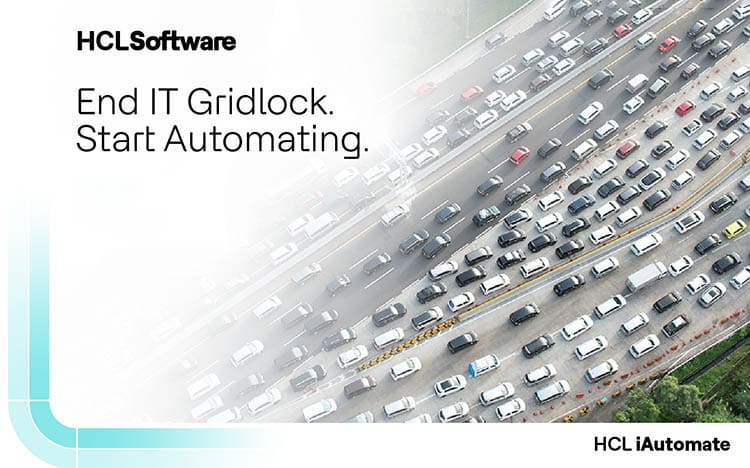
How Agentic AI Is Driving Proactive ITSM for MSPs

There is a quiet but consequential divide emerging among managed service providers. On one side: MSPs still running reactive service models, where the platform waits for something to break before it acts. On the other: MSPs that have shifted to proactive ITSM operations, where AI identifies, diagnoses, and resolves issues before end users are ever aware of them.
The technology driving that shift is agentic AI for ITSM — not a chatbot, not a copilot, but an operational layer that executes service workflows autonomously within defined governance boundaries. For MSPs, this distinction is not academic. It is the difference between a service model that scales and one that requires proportional headcount growth for every new client added.
This post examines why reactive ITSM is reaching its limits for MSP operations, how agentic AI changes the model, and what proactive service management looks like in practice.
Reactive ITSM Is Creating Operational Bottlenecks for MSPs
The reactive ITSM model has a structural ceiling. When service operations begin at the moment something breaks — alert fires, ticket opens, engineer investigates — the throughput of the system is bounded by how fast that sequence can run. Increase client count, and the ticket queue grows. Increase alert volume, and triage becomes the bottleneck.
For ITSM for MSPs, this ceiling is compounding. Ticket volumes across hybrid environments have grown significantly, driven by endpoint proliferation, cloud complexity, and client expectations that haven’t moderated. SLA pressure is real. When response times slip because volume has outpaced team capacity, the consequences are visible in client relationships and contract renewal conversations.
The human cost is equally real. Technician burnout is a consistent pattern in MSP environments where engineers spend the majority of their time on repetitive triage and routine incident handling. The work that attracted skilled IT professionals — complex problem-solving, architecture decisions, client advisory — gets crowded out by the volume of undifferentiated incoming work.
AI-powered ITSM cannot make the reactive model indefinitely scalable. It can process tickets faster. It can route more accurately. But as long as operations remain fundamentally reactive, the platform will continue to wait for problems to arrive. The scale problem is deferred, not solved.
Proactive ITSM addresses this structurally, not just operationally.
Why MSPs Are Moving Toward Proactive ITSM Operations
The business case for proactive ITSM is straightforward: it is cheaper, faster, and better for client relationships to prevent incidents than to resolve them.
Agentic AI for ITSM makes this operationally achievable. Rather than waiting for an alert to fire, agentic systems continuously monitor environments, analyze operational telemetry against historical patterns and known failure signatures, and initiate remediation workflows when anomalies indicate a developing problem. The incident that would have generated an SLA-impacting ticket never reached the service desk.
For MSPs, the compounding effect is significant. Proactive ITSM for MSPs does not just improve response time on individual incidents. It reduces the overall incident volume that reaches the service desk, improves SLA performance across the board, and frees technician capacity for the higher-value work that differentiates an MSP’s service from a commodity.
Gartner has predicted that agentic AI will autonomously resolve 80% of common customer service issues without human intervention by 2029, with an associated 30% reduction in operational costs. For MSPs, the trajectory is clear: the competitive standard in service delivery is moving toward proactive and autonomous, and the organizations building those capabilities now are establishing operational advantages that will compound over time.
How Agentic AI Changes the Traditional ITSM Model
Traditional Automation vs Intelligent Operational Decision-Making
Rule-based automation and agentic AI are categorically different capabilities, and conflating them leads to misaligned expectations.
Traditional automation executes predefined steps efficiently. If condition A, then action B. When condition A occurs reliably, and action B is always the right response, this works well. The boundary of the system is the boundary of what was anticipated when the rules were written.
AI-driven service management with agentic capability reasons over context. It can evaluate an incident it has not seen before, compare it against historical patterns, assess the likely resolution path, and execute — or escalate — based on its confidence in that assessment. The system handles novel situations not by failing, but by either attempting a best-confidence resolution or routing to a human with full context and a recommendation. The difference in operational coverage is substantial.
AI Agents That Execute Service Actions Autonomously
Agentic AI for ITSM is distinct from copilots and AI assistants in one critical way: it acts. Not suggests. Not recommended while waiting for a human to decide. It reads an incident, assesses the environment, selects a resolution path, executes it, and verifies the outcome — completing a full operational workflow that previously required human involvement at each step.
The governance layer is what makes this deployable in production MSP environments. Confidence thresholds determine when the agent acts autonomously and when it routes to a human with its recommendation and reasoning. Audit trails record every decision and action. Human-in-the-loop controls allow MSP operators to define, per client and per incident type, where autonomous execution is appropriate and where a human approval step is required.
This is not AI without accountability. It is AI with accountability built into the architecture.
Creating Continuous Operational Intelligence Across MSP Environments
Intelligent service management compounds its value over time because the system learns from every interaction. Each resolved incident, each escalation decision, each autonomous remediation adds to the operational intelligence available for future situations.
For MSPs managing multiple client environments, this creates a meaningful advantage. Patterns identified across client A’s environment that indicate a coming service degradation can inform monitoring logic applied across all environments. A remediation that succeeded for a specific failure type on client B’s infrastructure becomes part of the resolution library available for client C. The intelligence is distributed, not siloed.
This is the mechanism behind continuous improvement in proactive ITSM: not a static set of rules, but a learning system that gets better as the MSP operates on it.
Real-World Examples of Proactive ITSM Powered by Agentic AI
The most useful way to understand proactive ITSM is through the workflow changes it produces in practice.
Predictive incident detection: environmental telemetry indicates that disk utilization on a client server is trending toward a threshold associated with service degradation. The agentic system flags this, assesses whether automated cleanup is appropriate based on the client’s configuration, and either executes the remediation or creates a prioritized ticket with full context and recommended action — before the disk fills, before an application fails, before the client notices anything.
Automated root-cause analysis: a cluster of tickets arrives from the same client environment within a short window. Rather than routing them as individual incidents for separate investigation, the agentic system identifies the shared signal, determines the underlying cause, and resolves the root issue — closing the cluster of tickets as a single resolution event. What would have been twenty individual engineer-hours becomes one automated remediation.
Self-healing workflows: a monitored service falls below its availability threshold. Automated remediation executes — service restart, configuration reset, failover — within seconds. If the automated response resolves the issue, the workflow closes with a full audit trail. If it does not, the engineer receives a ticket with the full remediation history, the current system state, and the recommended next step. No time wasted on an investigation that the system already did.
Dynamic ticket prioritization: as SLA clocks advance, the agentic system continuously re-evaluates open incidents against current SLA risk. Tickets approaching breach are surfaced and escalated automatically, not discovered by someone checking a dashboard at the wrong time.
Innovaway, an MSP running over 20 enterprise clients on a single intelligent service management platform, achieved a 30% improvement in service delivery, 25% reduction in total cost of ownership, and onboards new tenants 35% faster than before — directly attributable to the shift from reactive to proactive operations.
The Business Impact of Proactive ITSM for MSPs
The operational impact of proactive ITSM translates directly into business outcomes that matter to MSP leadership.
Faster resolution times — or in many cases, no resolution time at all because the issue was addressed before it became an incident — improve SLA compliance across every client environment. SLA compliance is the most visible operational metric in MSP client relationships. Consistent improvement compounds into stronger retention and better competitive positioning in renewals.
Reduced operational costs follow naturally from automation doing the work that previously required engineer's time. When 70% of routine incidents are handled autonomously, the cost per incident drops significantly. That efficiency shows up in margin, not just throughput.
Technician efficiency improves when engineers are no longer spending the majority of their time on repetitive triage. The work that remains for human attention is genuinely complex — the cases that benefit from human judgment, client relationships, and expertise. This is also the work that engineers stay for. The MSPs that solve the routine work problem through AI-powered ITSM tend to report better technician retention as well.
Better customer experiences are the cumulative output of all of the above. When issues are resolved before they’re noticed, when SLAs are consistently met, and when the MSP can show clients a track record of proactive management with data to support it, the relationship moves from vendor to trusted operational partner.
Autonomous IT Operations Are Becoming the Next MSP Differentiator
Autonomous IT operations represent the maturity level beyond proactive ITSM — not just detecting and remediating issues proactively, but managing entire operational domains with continuous monitoring, self-healing infrastructure, and cross-platform orchestration that requires minimal human direction.
McKinsey’s 2025 State of AI survey found 78% of organizations are using AI in at least one business function, and only 7% have fully scaled AI enterprise-wide. For MSPs, this signals a significant competitive opportunity. The MSPs building autonomous operations capability now are operating ahead of client expectations and well ahead of competitors still running manual service models.
Self-healing infrastructure — where systems detect their own degradation and initiate corrective workflows without human intervention — is not a future concept. It is operational today in MSP environments running on platforms built for autonomous operations. The components that required daily monitoring and manual intervention six months ago are being managed continuously, improving without additional engineer time invested.
The operational differentiation is visible to clients. MSPs that can demonstrate predictive remediation, consistent SLA performance driven by autonomous systems, and a track record of preventing incidents rather than resolving them are competing on a different basis than reactive service providers.
Governance and Trust Will Determine Successful Agentic AI Adoption
The governance question in agentic AI adoption is not an afterthought. For MSPs deploying autonomous systems across regulated client environments — financial services, healthcare, government — it is a prerequisite.
Agentic AI for ITSM requires governance frameworks that define where autonomous action is appropriate, how that action is documented, and what human oversight mechanisms exist. Confidence thresholds determine when the system acts independently and when it routes to a human with its recommendation. Audit trails record every decision, every action, every escalation — creating the accountability record that compliance and client reporting require.
Explainability matters too. When an agentic system makes an automated decision that affects a client’s environment, the MSP should be able to explain what happened, why, and what the outcome was. Platforms that treat AI decisions as black boxes create operational risk. Platforms that build explainability into the architecture allow MSPs to have informed conversations with clients about how their environments are being managed.
Human-in-the-loop controls allow MSP operators to configure, per client and per scenario, where autonomous execution is permitted and where a human decision is required before action is taken. The goal is not to constrain AI capability. It is to deploy it in a way that builds client trust incrementally — starting with the operational scenarios where the confidence is highest and the consequences of error are lowest, and expanding scope as the track record builds.
Common Mistakes MSPs Make When Implementing AI-Driven ITSM
The MSPs that struggle with AI-powered ITSM implementation tend to make predictable errors.
- Deploying autonomous workflows across all incident types before establishing confidence in specific, well-understood scenarios. The right sequence is to start narrow, validate, and expand. Starting broad introduces failures in situations the system wasn’t ready for, eroding trust in the automation. Overautomating too quickly:
- Attempting to implement proactive ITSM without first establishing baseline monitoring and telemetry across client environments. Proactive operations require data. MSPs that haven’t invested in comprehensive monitoring visibility can’t benefit from predictive capabilities. Weak operational visibility:
- Introducing automation before service workflows are rationalized. Automating inconsistent processes produces inconsistent automated outcomes. Workflow standardization is a prerequisite to effective automation. Lack of process standardization:
- Selecting platforms without fully accounting for the integration effort required to connect them to existing RMM, monitoring, and endpoint management tools. Integration debt accumulates and limits automation capability. Poor integration planning:
- Deploying autonomous systems without defining confidence thresholds, escalation protocols, and audit requirements in advance. These decisions are much harder to retrofit after an edge case has already caused a problem. Ignoring governance requirements:
Best Practices for Building a Proactive ITSM Strategy
MSPs that build successful proactive ITSM strategies approach the transition in sequence, not simultaneously.
- Automation of broken or inconsistent processes produces broken automated outcomes. Map, rationalize, and document service workflows before introducing autonomous execution. Standardize workflows first:
- Deploy comprehensive monitoring and telemetry across all client environments before enabling predictive capabilities. Proactive ITSM is only as effective as the operational data feeding it. Improve operational visibility:
- Begin with high-volume, well-understood incident types where resolution paths are clear, and the consequences of an automated error are low. Password resets, connectivity checks, and standard hardware failures are the right starting point. Start with low-risk automations:
- Define confidence thresholds, escalation rules, and audit requirements before go-live, not after the first incident surfaces. Establish governance early:
- Add autonomous capabilities as the system demonstrates reliability in current scope. Client trust in proactive operations builds over time, and so does the operational track record that supports expanding automation scope. Scale AI incrementally:
Ready to shift from reactive to proactive? Start a free trial of Service Management to see what proactive ITSM looks like at the MSP scale.
The Future of MSP Operations Will Be Predictive, Autonomous, and AI-Native
The direction of MSP operations is toward environments that manage themselves, with human attention reserved for decisions and situations that genuinely require it.
Autonomous service desks will handle the majority of routine operational work without human involvement. Agentic AI for ITSM will orchestrate remediation across endpoint management, cloud infrastructure, and application layers within a single operational model. Self-healing infrastructure will address degradation continuously and automatically. Predictive operations will prevent the incidents that reactive models spend their time resolving.
AI-native MSP ecosystems are not a projection for five years from now. They are being built today by the MSPs making deliberate platform decisions based on where operations are going, not where they’ve been. The organizations doing this in 2026 will be setting the client expectation standard in 2028.
MSPs That Embrace Agentic AI Early Will Build Stronger Operational Resilience
MSPs can no longer rely solely on reactive service delivery models in environments that are growing in complexity faster than headcount can grow.
Organizations that combine proactive ITSM strategies with agentic AI and intelligent automation will be better positioned to improve operational efficiency, strengthen SLA performance, and deliver the resilient customer experiences that determine whether clients renew, refer, and expand.
The operational infrastructure built today determines the service delivery ceiling for the next five years. Building it on agentic AI is building it on the right foundation.

Start a Conversation with Us
We’re here to help you find the right solutions and support you in achieving your business goals.